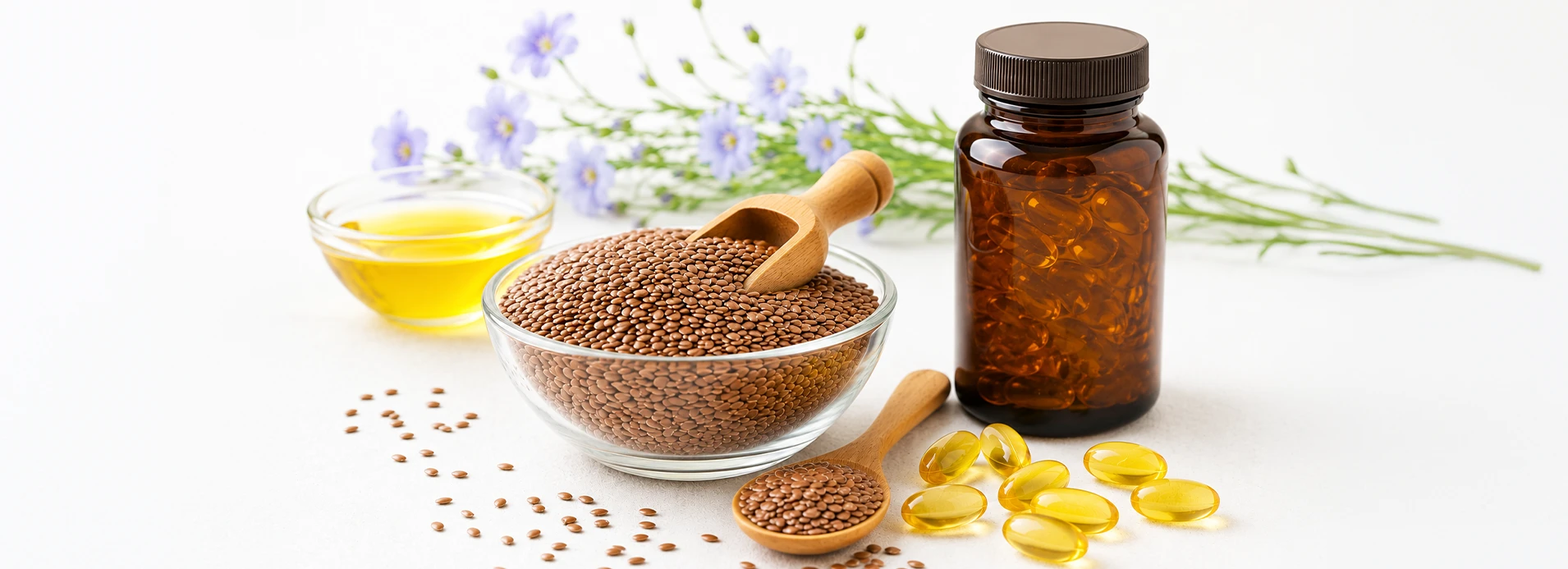
Flaxseed is one of the richest plant sources of alpha-linolenic acid (ALA), an essential omega-3 fatty acid that plays an important role in nutrition. It also contains dietary fiber and lignans, giving it a broader nutritional profile than an isolated omega-3 ingredient. For people seeking plant-based nutrition, flaxseed can be a practical way to increase ALA intake. It is particularly relevant to vegetarians and vegans who do not consume fish. Still, understanding the difference between ALA and the long-chain omega-3 fatty acids EPA and DHA is essential when evaluating flaxseed products.
What Is Flaxseed-Based Omega-3?
Flaxseed, also called linseed, comes from the Linum usitatissimum plant. Its nutritional value comes from several components, including ALA, fiber, lignans, and other plant compounds. Flaxseed oil concentrates the oil portion and therefore provides ALA but little or no dietary fiber.ALA is an essential fatty acid. Your body cannot produce it in sufficient amounts, so it must come from food or other dietary sources. According to the NIH, flaxseed and flaxseed oil are important plant sources of ALA.
Why Is Omega-3 Important for Heart Health?
Omega-3 fatty acids are polyunsaturated fats involved in several functions throughout the body. They are components of cell membranes and participate in biological processes involving the heart, blood vessels, and other systems. ALA is particularly important because it is an essential fatty acid.- Supports Cardiovascular Function
-
Supports Healthy Blood Pressure
-
Supports a Healthy Inflammatory Balance
How Flaxseed May Support Heart Health?
This is where the nutritional profile of flaxseed becomes particularly interesting. It is not simply a source of one fatty acid. Whole or ground flaxseed provides several components that may work together as part of an overall healthy dietary pattern.1. Provides ALA Omega-3
ALA is the primary omega-3 fatty acid in flaxseed. Because it is essential, obtaining adequate amounts through food is important. For adults, the NIH lists an adequate intake of 1.1 g per day for women and 1.6 g per day for men.2. May Support Healthy Cholesterol Levels
Some research suggests that whole flaxseed and flaxseed lignans may help lower cholesterol levels. However, the evidence is not identical for every flaxseed product. This difference highlights why consumers should consider the complete formulation rather than assuming that all flaxseed products have the same nutritional effects.3. May Support Healthy Triglyceride Levels
Triglycerides are another type of blood lipid associated with cardiovascular risk. Research suggests flaxseed may help support healthy triglyceride levels in some people, although results vary across studies. Its ALA, fiber, and other plant compounds may contribute to these potential cardiometabolic benefits when included in a balanced diet.4. May Support Healthy Blood Pressure
Healthy blood pressure is an important part of cardiovascular wellness. Research indicates that flaxseed supplementation may help support healthy blood pressure in some populations. However, individual responses vary, and flaxseed should complement a balanced lifestyle rather than replace prescribed blood-pressure treatment.5. Provides Lignans and Other Plant Compounds
Lignans are naturally occurring plant compounds found in flaxseed. Their presence is one reason whole flaxseed differs nutritionally from isolated flaxseed oil. When evaluating flaxseed for cardiovascular nutrition, it is therefore useful to consider the complete food matrix rather than focusing only on its ALA content.6. Provides Dietary Fiber
Ground flaxseed also contributes dietary fiber. Fiber supports digestive health and can form part of an eating pattern rich in whole grains, vegetables, fruits, legumes, nuts and seeds.Who May Consider a Plant-Based Omega-3 Supplement?
A plant-based omega-3 supplement may be considered by:- Vegetarians who do not consume fish
- Vegans seeking plant-derived omega-3
- People who rarely eat foods containing ALA
- Adults looking for convenient plant-based nutrition
- People seeking the best best omega-3 supplement in India that fits their dietary preferences
How to Choose a Flaxseed-Based Omega-3 Supplement?
If you are comparing heart health supplements, look beyond the front label.Check the Omega-3/ALA Amount
A large capsule does not necessarily mean a high ALA content. Check the nutrition panel and identify the actual amount of ALA supplied per serving.Check the Source
The label should clearly identify flaxseed or flaxseed oil as the source of the omega-3. This makes it easier to compare products accurately.Check Quality Testing
Look for information about ingredient identity, manufacturing standards and quality-control practices. Batch testing, where applicable, can provide additional information about product consistency.Check Serving Size
Compare products based on their actual nutrient contribution per serving rather than capsule size or broad marketing statements.Consider Your Dietary Preferences
If you follow a vegetarian or vegan diet, confirm that the complete formulation, capsule shell, and other ingredients fit your requirements. A transparent label is usually more useful than a long list of generalized health claims.Why Choose Extracard for Omega-3 Supplementation?
Extracard combines Omega-3 from flaxseed, CoQ10, L-Arginine, Magnesium, Ginseng, Zinc, Selenium, Lycopene, and antioxidant-rich plant extracts in one convenient daily tablet. As one of the best nutrition supplements in India, its balanced formulation is designed to complement heart-conscious nutrition while supporting everyday energy, vitality, and overall wellness. The inclusion of flaxseed-derived Omega-3 makes it a plant-based option for adults looking to include essential fatty acids in their routine. CoQ10 and selected vitamins and minerals add nutritional support, while Ginseng and botanical extracts complement an active lifestyle. With 30 tablets per pack, Extracard offers a simple, convenient way to support daily nutritional needs.How to Include Flaxseed Omega-3 in a Heart-Healthy Lifestyle?
Flaxseed works best as one part of a broader lifestyle rather than as a standalone solution.- Eat a varied diet rich in vegetables, fruits, whole grains, legumes, nuts and seeds.
- Include fiber-rich foods regularly.
- Choose healthy unsaturated fats more often.
- Stay physically active.
- Maintain a healthy weight appropriate for your individual circumstances.
- Avoid smoking.
- Limit excessive alcohol consumption.
- Monitor blood pressure and cholesterol with professional guidance.
- Use supplements to complement, not replace, a nutritious dietary pattern.
How Much Flaxseed Omega-3 Do You Need?
ALA is an essential nutrient, but there is no single therapeutic dose of flaxseed omega-3 established for heart disease prevention. A product’s serving size should be evaluated based on its actual ALA content, the rest of the diet, and the person’s individual nutritional needs.When Should You Take a Flaxseed Omega-3 Supplement?
There is no well-established rule that morning or evening provides superior cardiovascular benefits. Consistency and following the product’s serving instructions are more practical considerations.Taking an oil-based supplement with a meal may also be more comfortable for some people. If a product has specific directions from its manufacturer or healthcare professional, those instructions should take priority.
Are Flaxseed Omega-3 Supplements Safe?
Flaxseed and flaxseed oil are generally well tolerated in limited amounts, although higher amounts can cause digestive symptoms such as bloating, fullness, or diarrhea. NCCIH also advises caution because flaxseed and flaxseed oil may theoretically interact with anticoagulant or antiplatelet medicines.People taking medications should discuss supplementation with a healthcare professional before starting. Pregnancy and breastfeeding also warrant professional guidance because safety information for flaxseed and flaxseed oil in these situations remains limited.
People with allergies or existing medical conditions should also seek individualized advice. A supplement should never be used to replace prescribed cardiovascular treatment.
Medical Disclaimer: This article is for educational purposes and does not replace medical advice. People taking medication or managing a cardiovascular condition should speak with a qualified healthcare professional before starting a supplement.